Sustainability has become one of the most powerful narratives in modern consumer markets.
Across industries, brands are positioning themselves as environmentally responsible, often using language that signals progress, intention, and care.
As more products are labeled “eco-friendly,” the gap between perception and measurable impact has widened, making it challenging to distinguish what is truly sustainable from what is simply presented that way.
This eco-friendly perception is where greenwashing comes into play.
For people who value quality, design, and intentional living, understanding this distinction is essential — not just for making better choices, but for aligning them with real-world impact.
What Is Greenwashing?
Greenwashing is the practice of marketing a product or brand as environmentally responsible without meaningful evidence to support those claims. It prioritizes perception over performance, often relying on language, design, or selective storytelling to create the impression of sustainability.
This behavior is largely driven by demand. As people become more conscious of environmental impact, sustainability has shifted from a differentiator to an expectation.
In response, some brands invest in operational improvements, while others invest in messaging that suggests those improvements exist.
The result is a landscape where sustainability is frequently communicated, but not always substantiated. In many cases, greenwashing presents itself in easily overlooked ways, making it difficult to identify without looking beyond the label.
Common Greenwashing Examples to Watch For
Greenwashing tends to follow recognizable patterns. Once understood, these patterns reveal how surface-level claims are often constructed.
Here are some of the most common ways that companies greenwash their products:
- Vague language: Terms like “eco-friendly” or “natural” without specific definitions or measurable benchmarks
- Irrelevant claims: Highlighting a single positive attribute while ignoring the broader environmental footprint
- Hidden trade-offs: Emphasizing one benefit that overshadows higher environmental costs elsewhere
- Lack of proof: Absence of data, sourcing transparency, or verifiable standards
- Misleading visuals: Packaging and branding that imply sustainability without operational backing
Individually, these tactics may appear minor. Collectively, they reshape how sustainability is perceived — favoring simplicity over accuracy, and aesthetics over accountability.
Why Greenwashing Matters More Than You Think
Greenwashing does more than mislead. It fundamentally alters how trust is built in the marketplace.
When sustainability becomes a visual or verbal cue rather than a measurable outcome, you’re left to weigh assumptions rather than facts.
For brands operating with intention, this creates a different kind of challenge. Real sustainability is often complex, requiring trade-offs, long-term thinking, and operational transparency.
When greenwashed branding is everywhere, real sustainability can be overshadowed by claims that are easier to communicate but less meaningful in practice.
More broadly, greenwashing slows progress. It rewards alignment with perception rather than commitment to improvement, reducing the incentive for brands to invest in systems that create measurable environmental impact.
A Different Approach: Transparency Over Trends
Sustainability, when treated as a trend, is shaped by what resonates in the moment rather than what performs over time.
A more effective approach requires stepping back from perception-driven decisions and focusing on outcomes that can be measured, evaluated, and improved.
For us, that begins with transparency as a foundational guideline. Every decision, whether related to sourcing, materials, or distribution, is made with the understanding that it should be explainable, not just marketable.
When sustainability is viewed through the lens of full lifecycle impact, those decisions become clearer — and more defensible.
How We Avoid Greenwashing at One Water
Avoiding greenwashing requires more than careful messaging. It requires decisions that hold up under scrutiny across production, logistics, and material selection.
Reducing Carbon Emissions at Scale
Our production and distribution systems are designed to reduce carbon emissions at every stage, ensuring environmental impact is evaluated across the full lifecycle.
These considerations include how we approach reducing carbon emissions at scale, with each operational layer measured by its contribution to total output.
Rather than optimizing for perception, we prioritize measurable reductions that influence the entire system.
Optimizing Shipping Efficiency
Shipping is one of the most overlooked contributors to environmental impact, yet it plays a defining role in how sustainable a product truly is.
Our model emphasizes shipping efficiency across the distribution network, streamlining logistics to reduce unnecessary emissions.
By refining how products move — not just where they originate — we reduce waste across the supply chain while maintaining the consistency and quality expected from a premium experience.
Choosing Materials Based on Lifecycle Impact
Material selection is often where sustainability narratives become the most simplified. Certain materials are widely perceived as “better,” but those assumptions do not always hold up when evaluated across a full lifecycle.
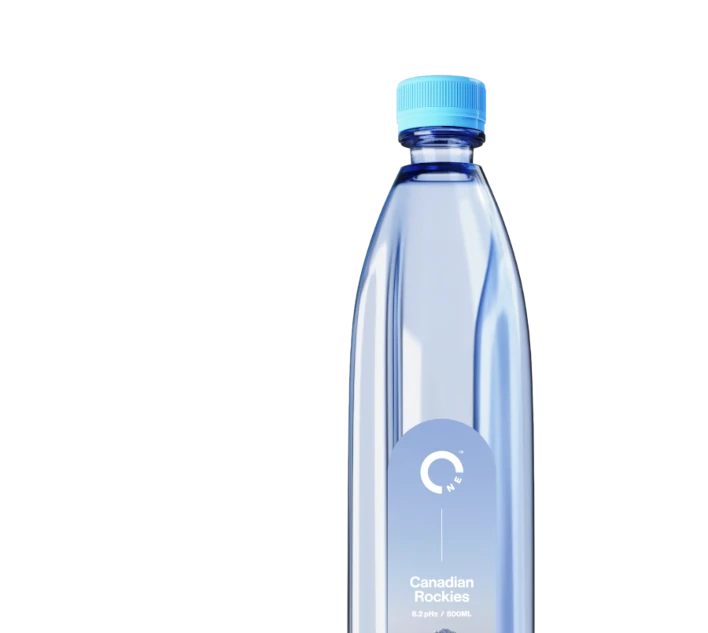
Our decision-making process centers on lifecycle impact, including the reasoning behind choosing plastic bottles over aluminum when assessed through a complete environmental lens.
By prioritizing data over perception, each material choice supports a broader sustainability system that’s grounded in performance rather than popularity.
We’re Elevating the Standard of Sustainability at One Water
Greenwashing is a byproduct of demand, but it does not have to define the outcome.
As awareness increases, so does the ability to distinguish between what is said and what is substantiated.
For us, elevating hydration is not about broadcasting sustainability — it’s about grounding it. Every choice is made with intention, measured against real impact, and designed to contribute to a more complete system.
Experience One Water for yourself. Find us in a store near you today.