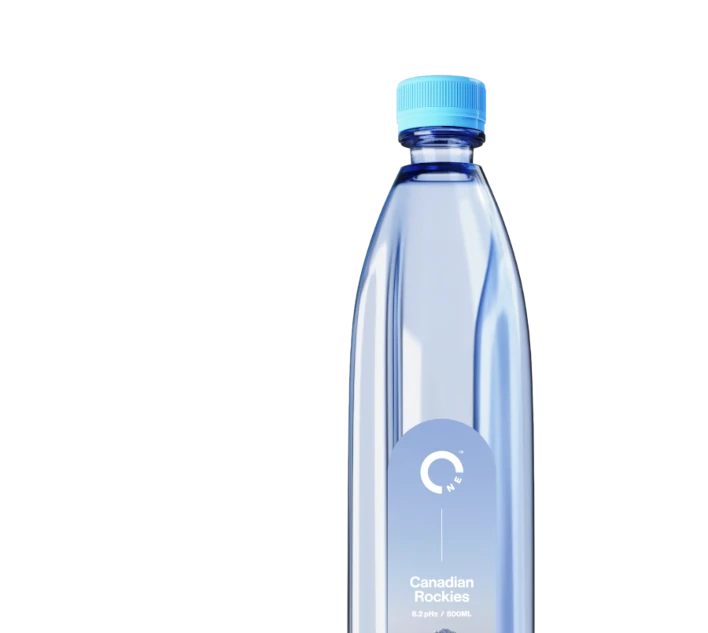
You twist the cap, take a sip, and toss the bottle into a bin labeled “recycling.” For a moment, it feels like the right thing to do — clean water, clean conscience.
Yet somewhere between the factory floor and the ocean’s edge, that simple act becomes part of a far larger story about convenience, culture, and consequence.
Studies show that bottled water can be up to 3,500 times harsher on the environment than tap water, mainly because of how it’s produced, transported, and discarded. But like most sustainability debates, this one isn’t black-and-white.
The truth is, it isn’t inherently “bad” for the planet. Bottled water has just been badly made for far too long.
How Bottled Water Became an Environmental Target
Bottled water wasn’t always a villain. In the 1970s and 80s, brands like Perrier and Evian emerged as clean, portable alternatives to questionable municipal water systems.
What began as a luxury quickly became a habit in the following decades, spreading across continents as brands scaled production and distribution.
But progress came at a cost. The industry’s rapid growth outpaced infrastructure, policy, and global recycling systems — leaving a trail of plastic and emissions that stretched across oceans.
Global pain points created by the bottled water industry included:
- Reliance on virgin plastic and fossil-fuel-intensive production
- Long-distance shipping and transport emissions
- Recycling rates below 30% in most regions
- Extraction concerns in drought-prone areas
A 2023 Sustainability review confirmed what environmental scientists have warned for years: packaging and transport remain the dominant contributors to bottled water’s carbon footprint.
Ultimately, bottled water met a global need, but in doing so, it created one of the world’s most persistent sustainability challenges.
The Bigger Picture: Why “Green” Doesn’t Always Mean Sustainable
As the industry began to recognize its environmental impact, it searched for quick solutions. Yet these efforts often focused on optics rather than transformation.
Green Fixes vs. Systemic Change
Over the past decade, the industry has rushed to “go green.” Lighter bottles, carbon offsets, and recycling drives became the norm. While these are all steps in the right direction, they’re often reactive rather than transformative.
The Ethics of Manufacturing study from Sustainability argues that true sustainability can’t exist without social equity, transparent sourcing, and lifecycle accountability. Swapping materials or marketing carbon neutrality is not enough, and the system itself needs to evolve.
In other words, being “green” doesn’t always mean being sustainable. One changes a company’s perception, while the other reshapes reality.
Recycling’s Reality Check
Globally, less than one-third of plastic bottles are recycled properly. Many countries still export waste overseas, displacing responsibility instead of reducing it.
Why recycling alone isn’t the answer:
- Recycling energy can offset carbon savings
- Infrastructure gaps limit true circularity
- Focus on disposal overshadows design
Sustainability, in its truest form, starts long before a bottle reaches your hand, with choices made at the design and sourcing stage, not at the end of its life.
Rethinking Responsibility: How the Global Industry Is Adapting
The conversation around sustainable bottled water has started to shift. Water brands are rethinking how they source, bottle, and distribute their products to balance convenience with environmental responsibility.
The Rise of Alternative Materials
Brands are reimagining materials through a lens of circular design and local impact. As one of the most common shifts in packaging, companies are opting for alternatives instead of typical plastics:
- Aluminum: infinitely recyclable, lightweight, durable — though energy-intensive to produce
- Glass: reusable and premium, but heavy to ship and fragile
- Plant-based bioplastics: renewable but reliant on specialized waste infrastructure
This material evolution is just one part of a larger transformation happening behind the scenes.
Localization and Smarter Distribution
Across Europe, parts of Asia, and North America, bottlers are moving toward regional production models, which reduce transportation emissions.
By bottling closer to the source and the consumer, these companies cut both environmental impact and logistical waste. It’s a subtle shift with a significant impact: progress through proximity and transparency, not expansion.
The industry is slowly learning that less global can actually mean more sustainable.
One Water’s Approach to Sustainability: Design, Transparency, and Intent
Sustainability has evolved from an abstract idea into a daily practice. It’s no longer about doing less harm, but about intentionally designing every decision to support the planet for generations to come.
The future of bottled water depends on this shift. It’s not about quick fixes but about long-term design thinking that balances what we take with what we give back.
This is the heart of our philosophy at One Water: sustainability built into the blueprint, not added as a reaction. By reimagining packaging, refining logistics, and creating systems that invite accountability, One Water demonstrates that progress comes from purpose, not perfection.
Discover One Water near you, and help us redefine what sustainable bottled water looks like.