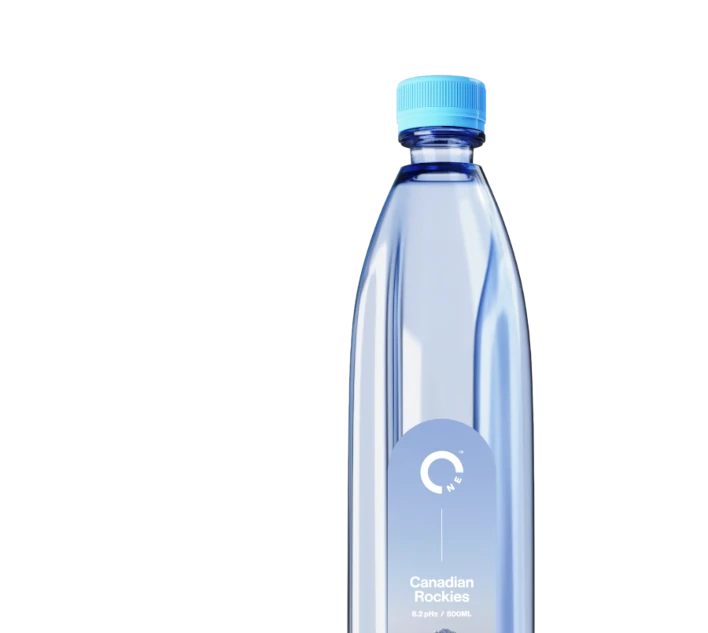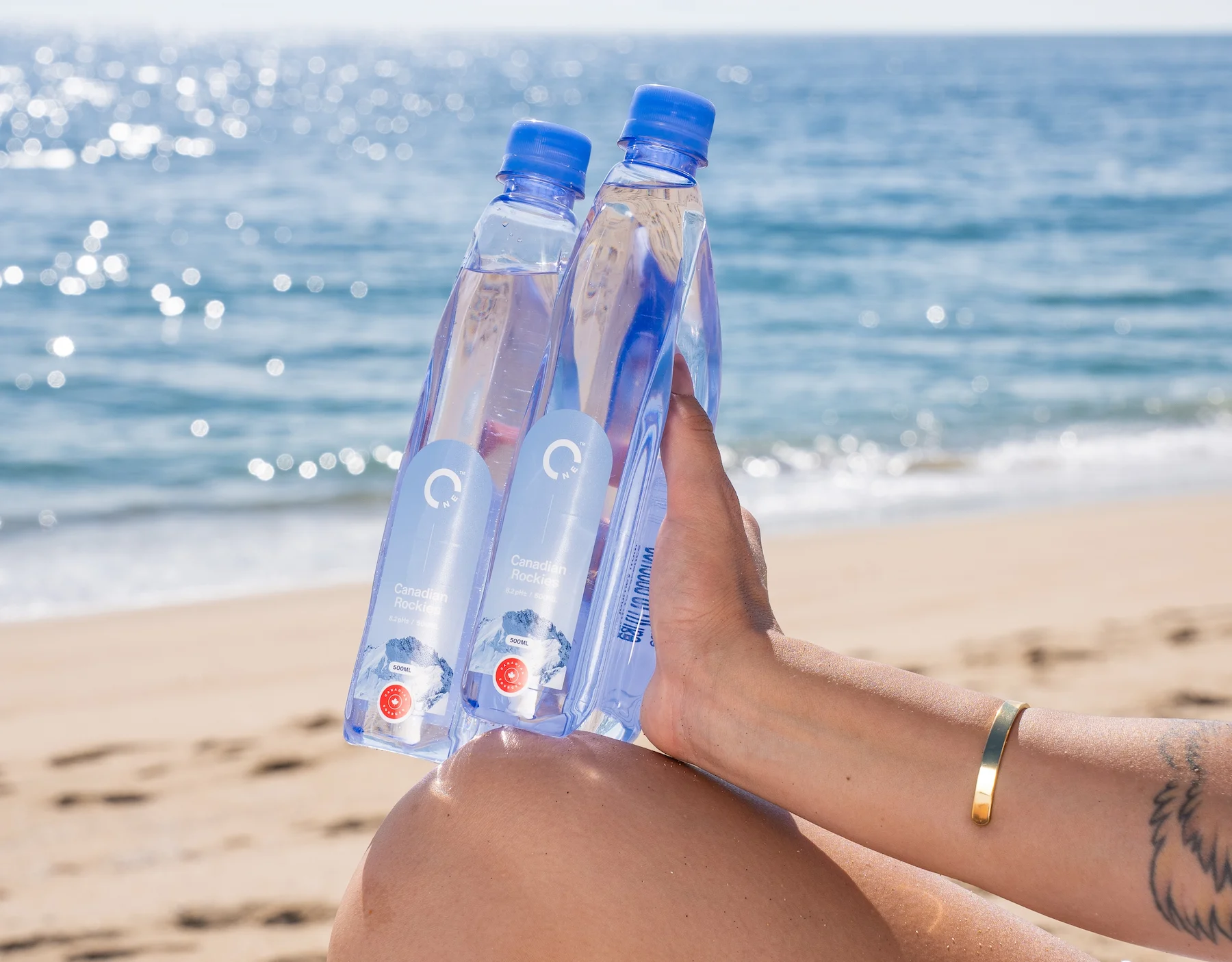
You’ve likely seen brands move toward aluminum and away from plastic bottles in the name of sustainability. We considered that path, too.
When we evaluated packaging for One Water, the question wasn’t which material sounded better — it was which one performed better across the full system.
From production energy to transportation emissions to recyclability infrastructure, we looked at the entire lifecycle. After that evaluation, we chose plastic bottles over aluminum.
It wasn’t a shortcut or cost-cutting decision.
We simply found that, within today’s infrastructure and our global distribution model, plastic enabled us to reduce shipping emissions, maintain purity, and design more efficiently at scale.
The Assumption Around Plastic Bottles and Sustainability
Aluminum has earned a reputation as the sustainable upgrade. It feels durable. It signals modern design. It’s often positioned as the responsible alternative.
But sustainability isn’t a symbol — it’s a system.
When you evaluate environmental impact, you have to look at the full picture:
- Raw material sourcing
- Energy required for manufacturing
- Transportation weight and emissions
- Recycling infrastructure availability
- End-of-life recovery efficiency
A material can look sustainable in isolation and perform differently when measured across its entire lifecycle. That’s why we didn’t make our decision based solely on perception.
What Most People Don’t Realize About Aluminum
Aluminum production requires significant energy input compared to many modern plastic manufacturing systems. From refining to forming, it’s an energy-intensive material.
Aluminum bottles also typically require non-BPA interior linings to prevent corrosion and protect taste, making them dependent on plastics as well. Those additional components are part of the overall system and environmental footprint.
Aluminum absolutely has benefits. It’s highly recyclable and lighter than options like glass, but it isn’t automatically the lowest-impact solution.
Why Plastic Bottles Made More Sense for One Water
Our choice was intentional and measured. We wanted to design a different type of water bottle that made a positive impact.
After evaluating each material across global sourcing, transportation, recycling systems, and product integrity, we concluded that plastic was the best option.
Lightweight by Design
Plastic bottles are significantly lighter than most bottles. That difference may feel small in your hand, but at scale, it matters.
Lighter packaging reduces fuel consumption during transport. When you’re moving product from pristine global sources to distribution centers and retailers, weight directly impacts emissions.
Choosing plastic bottles helps lower the transportation footprint across our supply chain — a meaningful part of total environmental impact.
Modern Plastic Has Evolved
Modern PET plastic bottles are designed to integrate into existing recycling infrastructure and are widely accepted in municipal programs across the United States. When properly recovered, they can be reprocessed and reintroduced into production cycles.
Here’s what makes today’s plastic bottles effective within current systems:
- Widely recyclable in established programs
- Lower production energy compared to aluminum
- Lightweight yet durable
- Efficient for large-scale distribution
Sustainability depends on how materials move through real-world systems — not just how they’re marketed.
Experience Matters: Hydration Is More Than Packaging
When you choose a bottle of water, you’re choosing more than a container.
You care about taste. You care about portability. And you care about how it fits into your routine — whether that’s at work, in transit, or after a workout.
Plastic bottles allow for a transparent construction, structural precision, and consistency that protects the purity of the water inside.
They’re durable enough to travel long distances while maintaining quality, yet light enough to carry comfortably throughout your day.
We didn’t choose plastic bottles because they were easier. We chose them because they protect the experience you expect.
Sustainability Is About Systems, Not Symbols
No single material is perfect.
True sustainability depends on the broader system in which a material lives, including how products are produced, transported, used, and recovered.
That’s where intentional engineering makes a measurable difference.
Our plastic bottles are designed with an interlocking structure that allows them to fit together more efficiently during shipping.
This revolutionary change in shape reduces unused space in transit and cuts shipping emissions by approximately 30% compared to traditional bottle configurations.
When you improve how a bottle moves through the supply chain, you improve its total environmental footprint — not just how it looks on a shelf.
Experience the Difference of One Water for Yourself
We made the deliberate choice to go with plastic over aluminum because it checked all of the boxes we needed.
After considering production energy, transportation weight, recyclability systems, and product integrity, it was the right option.
From there, we took a unique approach to bottle shape with our award-winning interlocking design, engineered for measurable emission reductions.
Discover the purity of nature. Use our store locator to discover One Water near you.